




Press
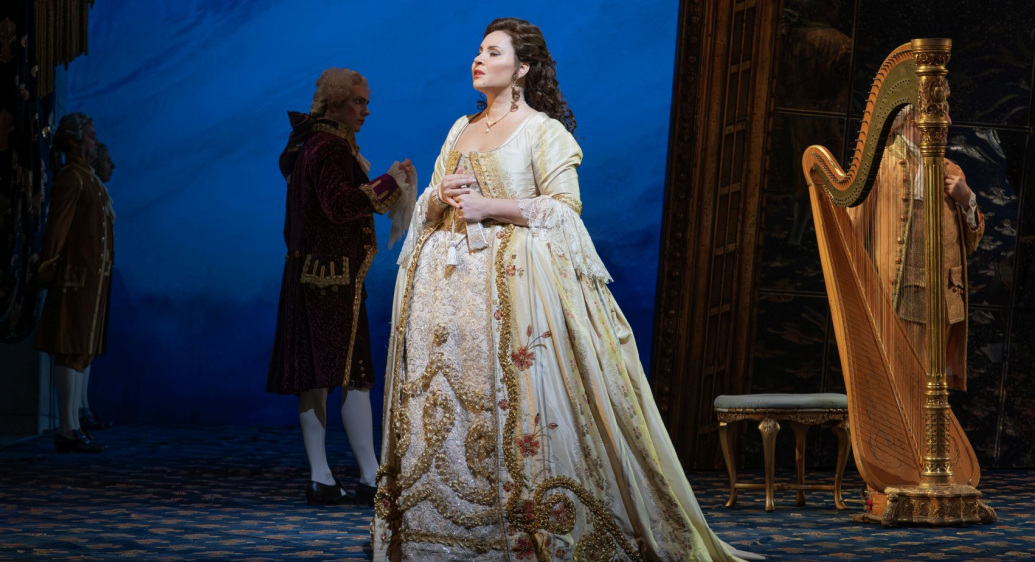
Press review “Andrea Chénier” Metropolitan Opera
“Sonya Yoncheva, another diva without a doubt, sang one of the finest Maddalenes ever heard at the Met. Her performance in La mamma morta will forever be etched in memory as one of the greatest moments ever experienced at The Met. She is all power, vocal quality, and brilliant high notes, while also possessing a low register with a darkness of irreplaceable beauty.”
Anthony Pizzalio, Lohengrin Magazine
“The Met has assembled a dream cast for this revival—Piotr Beczala in the title role, Sonya Yoncheva as Maddalena, and Igor Golovatenko as Gérard—and under the baton of Maestro Daniele Rustioni, the audience was truly enraptured by Giordano’s most enduring masterpiece.
(…)
His first duet with Sonya Yoncheva, particularly in “Ora soave, sublime ora d’amore!” increased the intensity, both singers’ voices blending flawlessly together. In Act III, Beczala’s rendition of “Sì, fui soldato” was a rousing defense of his idealism, wrapped in a luxuriously splendid vocality. “Come un bel dì di maggio” attained a peak of poetic lyricism and stirring emotions, Beczala’s voice moving from silky dreaminess to fiery valor.
Sonya Yoncheva made a stunning Met role debut as Maddalena. Her lush sound and riveting vocal coloring showcased Maddalena’s emotional growth from a frivolous aristocratic girl to a passionate, determined, self-sacrificing woman. In the Act II duet with Beczala, Yoncheva’s shimmering kaleidoscope of vocal colors was astonishing. Her powerful delivery of “La mamma morta” was profoundly ravishing, ranging from intimate softness to deep sadness to abundant soaring lines. Yoncheva’s lower register has developed impressively, granting her access to effective dramatic nuances. All throughout her voice, she has acquired new colors and an even greater ease of spinning out rich tones, without rushing or pushing, inviting us to luxuriate in them. Yoncheva’s voice was always remarkable in its clarity and purity of tone, and now it has an added dimension of earthy warmth and passion. She has developed into a truly complex and fascinating artist. In several moments, her emotional mesmerizing colors and her ability to naturally flow from one to another reminded me of Callas. The final duet with Beczala resounded both tender and heroic, their voices flying thrillingly over the orchestra and achieving an electrifying vocal pinnacle with “Viva la morte insiem.”
Maria-Cristina Necula, Woman Around Town
“Sonya Yoncheva was a glamorous Maddalena, at first a frivolous, petulant daughter, later a woman transformed by tragedy and love. The soprano filled Giordano’s musical lines with lush sound and painted the emotions it conveyed through a fantastic array of vocal colors. In Maddalena’s Act II duet with Chénier, “Ecco l altare,” Yoncheva’s silvery vibrato paired with the violins to create a stunning effect.
The emotion-laden cello introduction to “La mamma morta” presaged the carefully sculpted phrases in which Yoncheva related the terror of her mother’s death and the kindness of her former servant Bersi. When singing of her love for Chénier, Yoncheva’s voice became a blazing torrent of emotion, culminating in an effortless, shimmering high B that floated through the house.”
Rick Perdian, New York Classical Review
“Throughout the duet, Yoncheva and Beczała inspired each other to greater heights, both of them blasting over the orchestra gloriously in the final sequences of the duet. “Viva la morte insiem” is an incredible final line and their high Bs beamed into the hall with a vigor few artists will ever manage.
Speaking of Yoncheva, the soprano comes to grow from role to role, her singing and stage essence increasingly irresistible. Her Maddalena skips and twirls around throughout Act one, her voice nimble and light. It was in Act two where her vocal potency started to truly take form as she commenced “Ecco l’altare.” the delicate beauty in her voice allowed to resonate freely. As she sang “Non conoscete amor!” back to Chénier, the voice blossomed on the F sharp, the wide vibrato shimmering. The Cantabile “Erravate possente” showcased Yoncheva’s elegantly fluid legato. As she did with “The Queen of Spades,” there was a confidence in how she shaped phrases, the build across lines palpable. This was especially apparent throughout the Allegro molto mosso where, despite the quicker rhythm, there was fluidity in Yoncheva’s singing and evenness throughout the registers. The climax of this section, with its more sustained notes gave way to a glorious piannissimo on “Proteggermi volete?” allowing Beczała to come in with the beautifully aforementioned piano sound.
Maddalena’s big moment comes in Act three with “La mamma morta.” But right before that, she must contend with Gérard’s advances. He’s overpowering her and she delivers “Se della vita sua tu fai prezzo il mio corpo” in the lowest reaches of her voice with the line sitting around a C#. We’re in contralto territory here and a soprano without a solid chest voice has no shot at making anyting out of these lines. Yoncheva’s lows were resplendent in its depth of sound and potency. More importantly, there was aggression, fight, anger in how she delivered these lines, setting the stage for a heart-rendering take of the renowned aria. And what a take it was. Yoncheva took her time with the aria’s opening lines, the tempo expansive, the orchestra gentle, allowing the soprano to sing softly, with very gentle crescendoes and then subtle sobbing diminuendos on “la stanza mia” and “salvava!” There was explosiveness on “quando ad un tratto” but there remained some restraint. The ensuing phrases in the lower reaches while punctuated with bitterness, were marked by fluidity of line (yes I know I am using that a lot, but it was a signature of this performance). There was expansiveness throughout the opening half of the aria, and yet Yoncheva kept it moving forward into the Andantino section that commences with the glorious “e dice ‘Vivi ancora!’” Here Yoncheva unleashed her soprano, rising over the increasingly zealous orchestra, all the way to the climax where her B natural was gripping in its intensity. It’s an aria full of so much torment and pain and yet full of longing and hope and Yoncheva managed to immerse the listener in each and every one of those.
I’ve mentioned that Yoncheva has a magnetic stage presence, something that I didn’t always feel. But not only does her voice aptly express and define her characters, but every movement on stage, every glance, adds to that experience. Whether it be how she glanced at Beczała’s Chenier or the disgust in her face and body language as she tried to protect herself from a conniving Gérard. More impactful was the natural interactions with her colleagues. There was a moment following the opening duet where Yoncheva and Beczała stood with open arms to take in their applause. But then they glanced at one another and then decided to kiss. The moment felt genuine, not pre-planned. The stage kisses felt real. Same for a hug that she shared with Igor Golovatenko’s Gérard near the end of the opera. There was warmth and comfort in their closeness and it added layers to a relationship that evolves rather quickly dramatically and can feel forced in other interpreters hands. Yoncheva, as evidenced in her “Queen of Spades” performances earlier this year, is an artist whose stage presence makes everyone around her better.”
David Salazar, OperaWire
“Reunited with soprano Sonya Yoncheva – making her own Met role debut as Maddalena, the poet’s aristocratic lover – for the first time since their lauded partnership in the Met’s 2022-23 production of Giordano’s Fedora, the two are particularly well-paired. They express their love in two of the most highly charged duets in the Italian operatic repertoire: the intimate “Ecco I altare” of Act 2, where the effect of Yoncheva’s shimmering vibrato coupled with Beczała’s fervent high notes was dazzling, and in the finale’s “Vicino a te”, sung as they are being taken to the guillotine, where the charismatic pair delivered all the vocal excitement one could hope for. In Maddalena’s famous “La mamma morta”, the graceful cello solo introduction laid a foundation for Yoncheva’s beautifully shaped phrases, describing her isolation and vulnerability after losing her home and family to the Revolution.”
Susan Stempleski, Bachtrack
[Photo: Karen Almond / MetOpera]